AC Blowing Hot Air? Sometimes All a Fan Can Do Is Move It Around
Author
Derek Granger
Date
August 25, 2026
What a Fan Actually Does Well
Fans aren’t useless. Moving air across damp skin speeds up evaporation, and that makes you feel several degrees cooler than the thermostat reads. That’s real relief, and on a mild night with the windows open it can be enough.
Where That Stops Working
Once the air around you is hotter than your skin, the trick stops working. Federal heat guidance is blunt about this: once indoor temperatures climb into the 90s, a fan by itself is no longer considered adequate protection, especially for older adults, small children, and anyone on medication that affects how the body handles heat.
That’s the line I want homeowners to know. Below it, a fan buys you time. Above it, a fan is just noise.
🍑 Owner’s Note from Derek: If the house is above 90 inside and someone in it is elderly, very young, or sick, stop troubleshooting and go somewhere cool. A neighbor, a relative, a movie theater. The unit will still be broken in two hours. Call us from the cool place.
Why Your AC Is Blowing Hot Air in the First Place
Nine times out of ten, it’s one of a short list. Some of these you can rule out yourself in five minutes.
The thermostat got bumped. Fan mode instead of Cool. Heat instead of Cool. It happens more than people admit, usually after someone cleans or a kid pushes buttons.
A clogged filter choked off airflow. Restrict the air moving over the indoor coil and the coil gets too cold, ices over, and stops transferring heat. Then you get weak, warm air out of the vents.
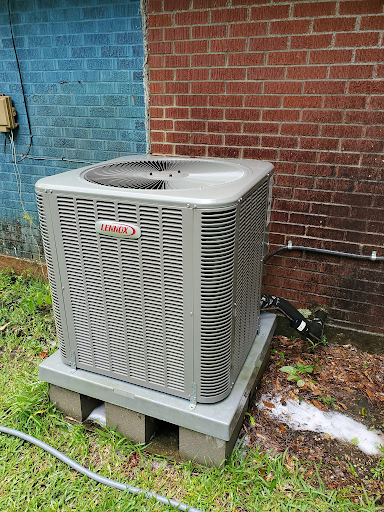
The outdoor unit isn’t running. Go look. If the indoor blower is humming but the outside unit is silent, you’ve usually got a tripped breaker, a failed capacitor, or a bad contactor.
The condenser coil is filthy. Grass clippings, pollen, and that fine North Georgia dust build a blanket over the coil. Heat can’t escape, so it stays in your house.
Refrigerant is low. Refrigerants don't get used up. If it’s low, there’s a leak, and adding more without finding it is money poured on the ground.
A capacitor or compressor failed. This is the one that turns a warm house into a real repair conversation.
The Five-Minute Check Before You Call
Do these in order. It costs you nothing and it sometimes ends the problem right there.
- Thermostat set to COOL, fan on AUTO, target a few degrees below room temp.
- Pull the filter. If you can’t see light through it, replace it.
- Check the breaker panel and the outdoor disconnect box.
- Walk outside. Is the fan on top of the unit spinning?
- Look at the copper lines. Frost or ice means shut the system off at the thermostat and let it thaw before anyone touches it.
If you’ve been through all five and you’re still getting warm air, that’s the point where guessing gets expensive. Our guide on what to do when your AC stops working walks through the same sequence in more detail.
What the Gauges Told Us That Night
I got to her house the next morning a little after seven. Thermostat was set right. Filter was newish. Outdoor fan was spinning. So the easy answers were already gone.
I put my gauges on it and the pressures told the story in about ninety seconds. The coil was packed solid with cottonwood fluff and lawn dust. The system was straining to shed heat into her backyard and losing.
We cleaned the coil, checked the charge, tightened up the electrical connections, and tested it with her standing right there. Vent temperature dropped into the fifties while we were still in the driveway. No new equipment. No sales pitch. A repair.

That’s the part I care about. Peach State HVAC has built its reputation across Dawsonville, Cumming, and Gainesville on a repair-first approach, which is why homeowners keep calling us back when the warm-air call comes in. Most of the time, hot air out of the vents is a repair, not a replacement. The only way to know which one you’re looking at is to measure it.
The Cheapest Fix Is the One You Do in April
Almost every hot-air call I run traces back to something a tune-up would have caught. A weak capacitor reads low on a meter long before it fails. A dirty coil is visible. A slow refrigerant leak shows up in the pressures.
Two visits a year, spring and fall, and you find these things on a 70-degree Saturday instead of a 96-degree Tuesday night. That’s the entire argument for regular AC maintenance, and it’s why our Peachy Comfort Club plans exist.
Put the Fan Back in the Closet
A fan is a decent friend on a mild evening and a poor substitute for a working system in a Georgia summer. If your vents are pushing warm air and the five-minute check didn’t fix it, the heat isn’t leaving your house, and no amount of stirring will change that.
We run 24/7 emergency service across North Georgia with a same-day cooling guarantee. Call us at (706) 968-3649 and let’s get the heat back outside where it belongs.
FAQs
What’s the best thing to do when your AC is blowing hot air?
Check the thermostat mode, the air filter, and the breaker first, then confirm the outdoor unit is actually running. Those four checks solve a surprising number of calls. If warm air continues after that, shut the system off and call a licensed tech rather than letting it run, since a frozen coil or failing compressor gets more expensive the longer it operates.
Will running fans while I wait for a repair raise my power bill much?
A single box fan costs pennies a day to run, so a few fans overnight won’t hurt your bill in any meaningful way. The real cost shows up if your AC keeps cycling while it’s broken, or if a frozen system runs long enough to damage the compressor. Turn the cooling off at the thermostat, keep the fans if they help you sleep, and get it looked at.